from the pit · redcliffe · saturday 27 june 2026 · the issue
Where We Belong
Redcliffe, Settlement Cove, 27 June. The festival, the cold, and the encore we had to start ourselves.
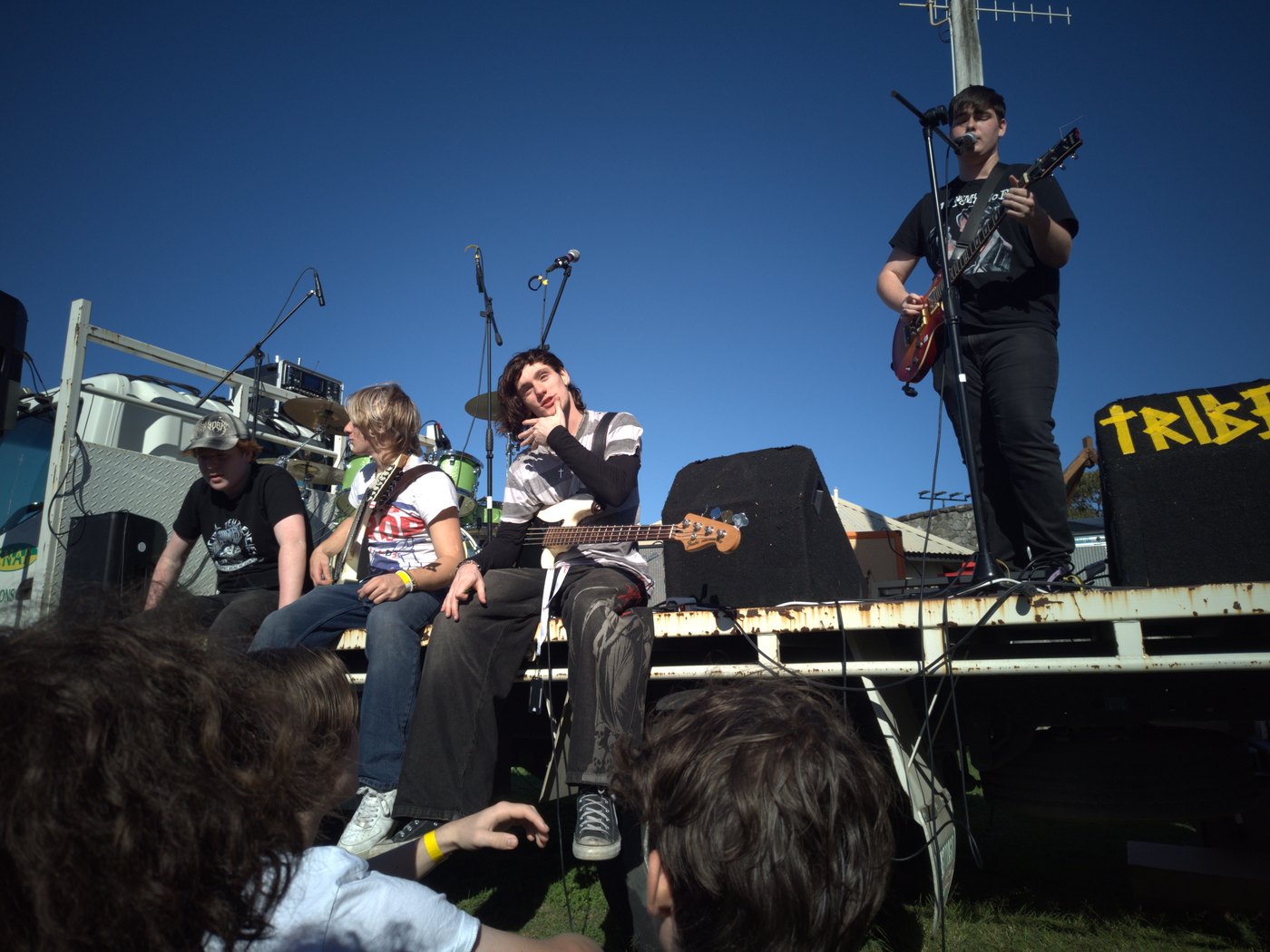
delphic afterparty
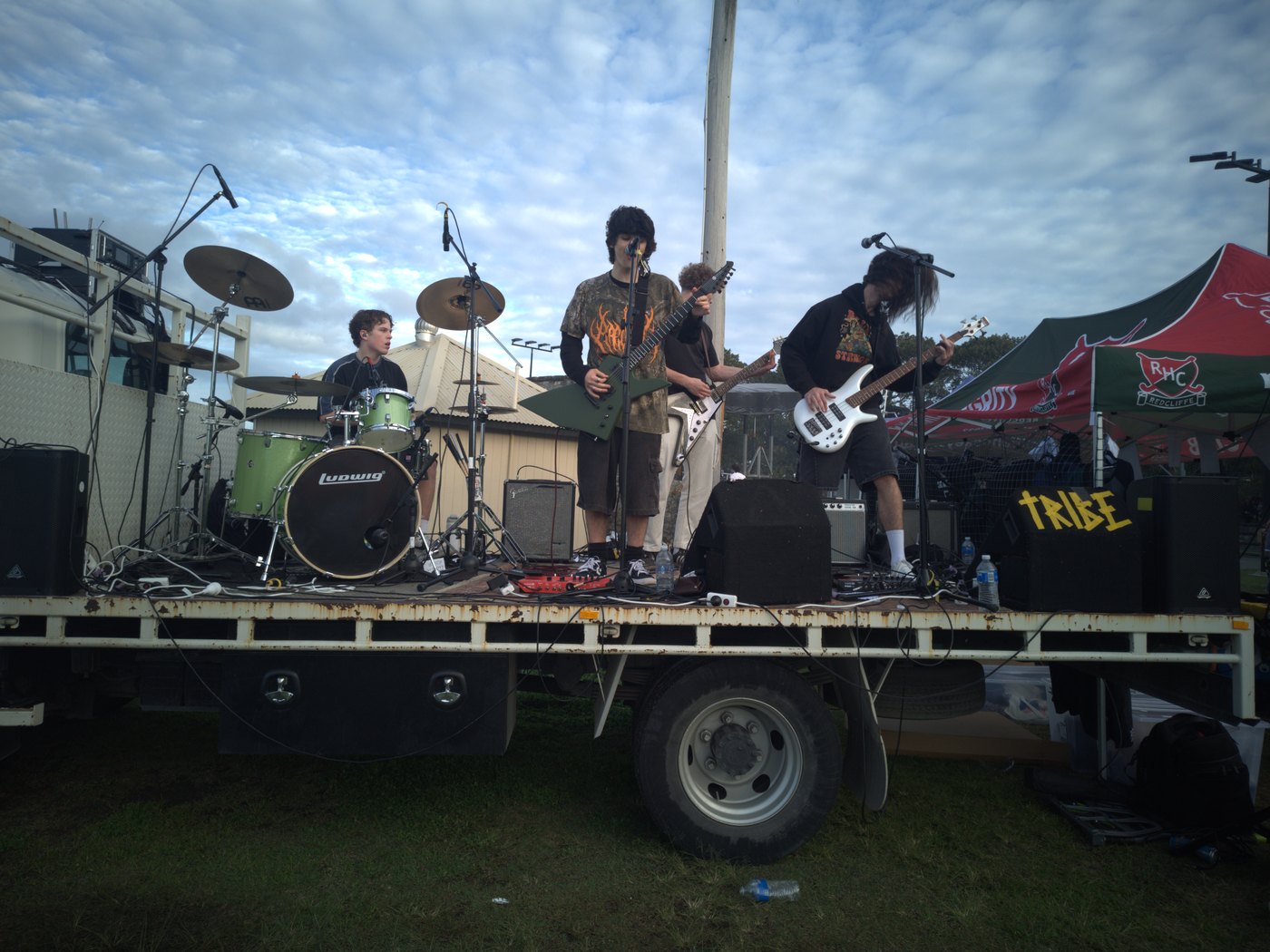
findaway
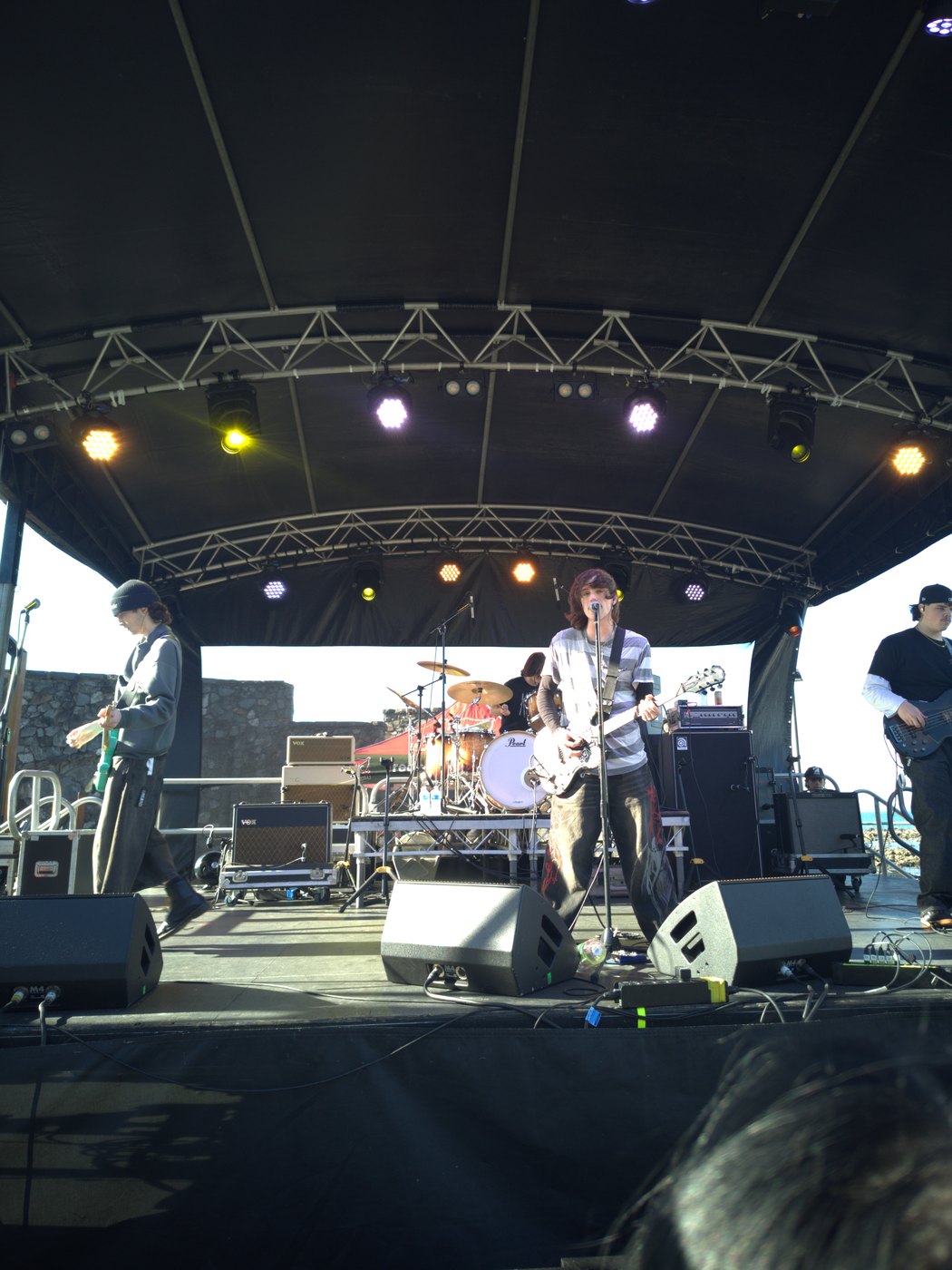
heatstroke
heatstroke 02
pricey
the encore
the phosphenes
the screaming jets
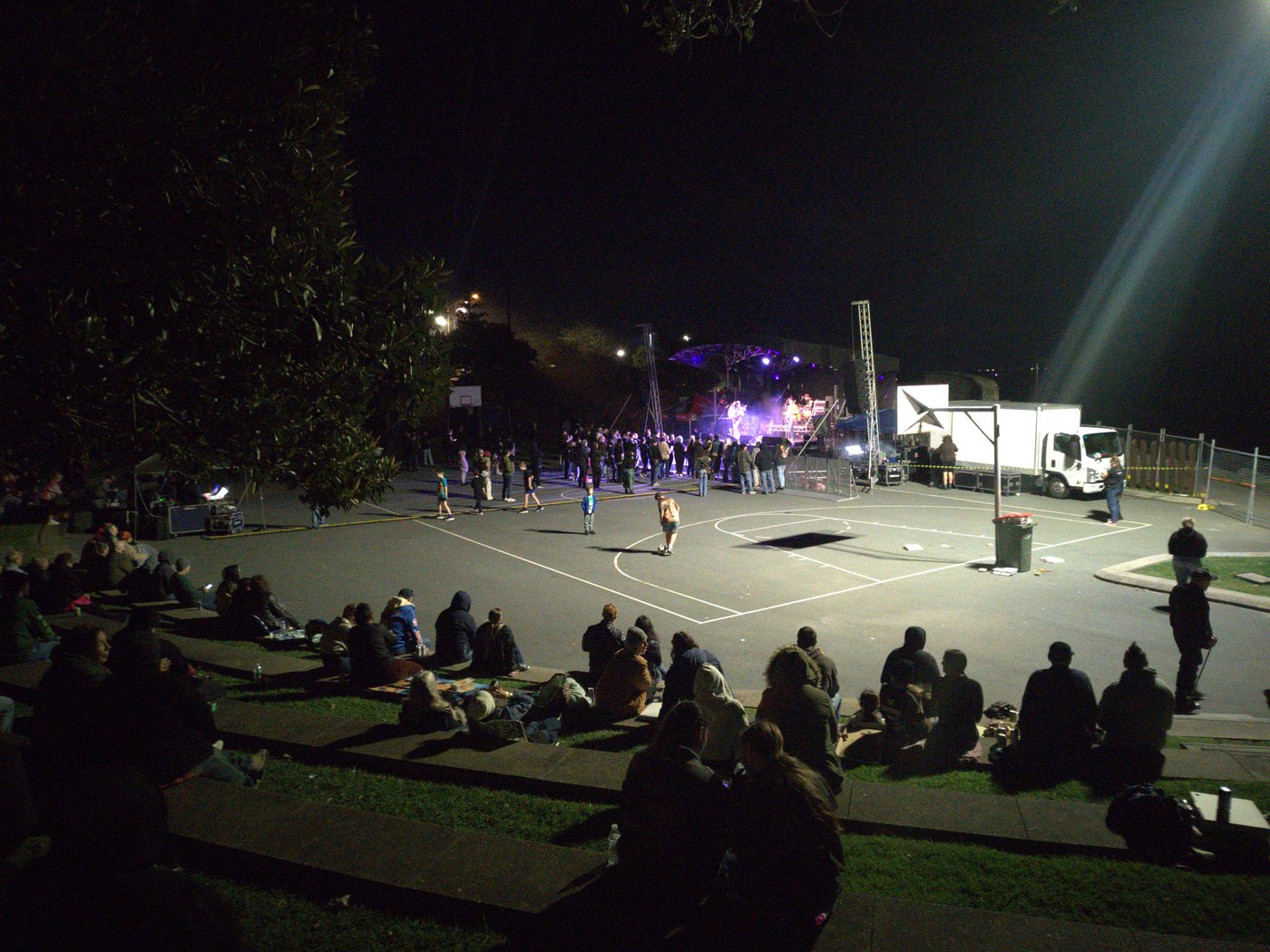
the wait
Going up to Redcliffe for Where We Belong felt like a pilgrimage. Two hours of bus and train and bus again, running on no sleep at the end of a term that had gone through me like a truck, and somewhere on the peninsula I thought of Noel Gallagher at the end of the Be Here Now tour, standing at Teotihuacan at the last show of the original lineup, in a place he'd never been that felt like it had been calling him anyway. That is roughly the state I arrived in. The bay air seemed to wash the term off me. I'd never been out there before either.
I got off at the wrong stop, which I only worked out because nobody else on the bus looked like they were going to a gig; just civvies, no dyed hair, no band tees, none of the usual signs you're on the right train. So I walked, and the music got clearer through the scrub, and for one moment, with the bush blocking the view and the PA rolling over it, it sounded like it was going to be our Knebworth.
It wasn't, and there's no point writing it like it was, because the honest version is the more interesting one. Settlement Cove is an amphitheatre that doubles as a basketball court, which tells you most of what you need to know about who it was built for. The ticket was fifty bucks, twenty one acts across two stages, ten in the morning to ten at night, and the crowd when I walked in was mostly mums and dads in their forties and fifties, sitting down, understandably, because they aren't at the front of the action anymore. Tomohung were on the main stage giving it full theatrics, the singer doing laps of the crowd mid-song, a band that size with a festival PA behind them, and the response never left the picnic blankets. The music was there. The crowd it was built for wasn't. The Delphic Afterparty boys waved and shouted that they liked the issue I'd published at midnight that morning, which meant more than they knew, because I'd spent weeks on it and slept about four hours.
Ace was set up near where I'd dropped my stuff, and it took her a second to recognise me; the sunglasses, or how completely cooked we both were. We'd had the same term at different schools, the same marathon, the same people who treat you a certain way for not being another sheep, and we'd both turned up solo expecting to find the scene here and found each other instead. That's the thing about gigs like this. You go for the bands and stay for the one conversation that makes the trip make sense. We watched a grunge act called Ruination come and go, perfectly average, not their fault; the whole bill was a hodgepodge, punk next to pub rock next to indie folk, a festival trying to be everything at once instead of knowing its audience, and everyone we talked to said the same thing about the marketing. There was a schedule, technically, and it was shit, and it had stopped meaning anything by early afternoon, so the day just became twenty one acts across two stages in whatever order the day felt like; you don't see a festival like that, you see the one line you walk through it. The first pit of the day apparently belonged to a band called Paper Plate Pals, who I never laid eyes on, and I only know that because exactly one other write-up of this day exists anywhere; between their account and mine, the whole bill still doesn't get covered. Two to three hundred people came through. Punk in the Park pulled less than half that with five unknown bands and one working speaker in the rain, and it felt ten times the size, which should tell the organisers of this city something about what scale actually is.
Delphic Afterparty broke the stillness, because of course they did. They played off the back of an elevated truck, which kills the in-your-face closeness this music runs on, and they made it work anyway; the same set as Punk in the Park, played weirder, the band cracking that they 'haven't played many festivals' so they didn't know how this was meant to go. The 'what's so good about picking up the pieces' chorus rang truer than it had any right to, and not just because of the term. The gig fell on the 27th of June, a year to the day since the last real afternoon I spent with the friend who was the whole of my 2025, back when belonging wasn't something I needed a festival to hand me; everyone's got one of those, the person who's still there and isn't the friend anymore. That chorus had the date inside it. And the truck did something the halls never do; it stripped them back. Last Words and Love Letters landed like early Paramore, real longing in it, the 'nothing's coming back' hook hanging there like an unsent letter, and for a few minutes you could see what this band looks like when the moshpit isn't there to carry the meaning for them. Noel used to get a chair brought out mid-set at the peak of Oasis so the songwriter could hold the crowd without the wall of noise; this was Delphic's version of the chair, and it suits them more than they probably want to hear.
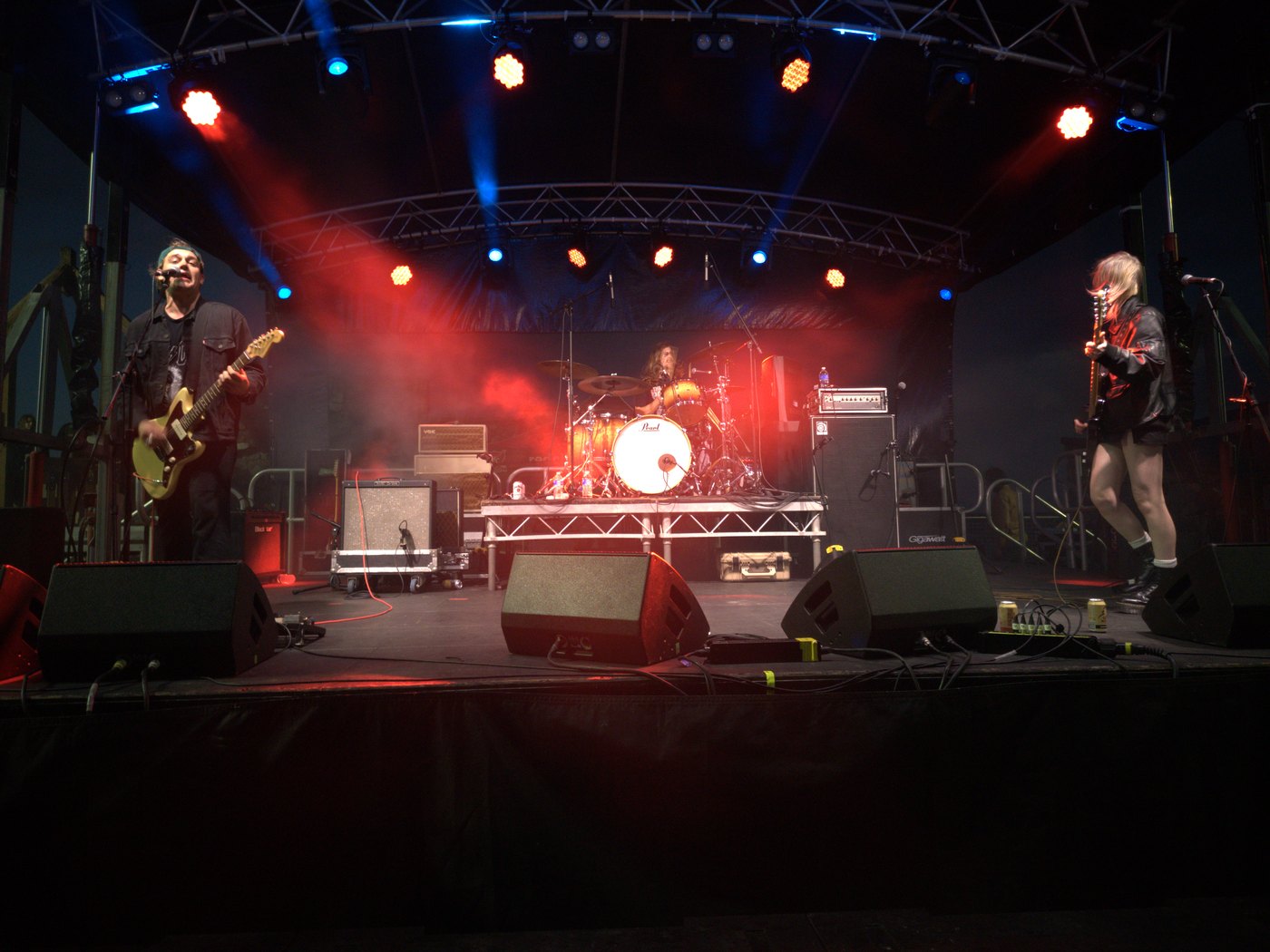
Heatstroke hit the grade on the big stage. Second guitarist Jimmy Lloyd, in since the end of 2024, one of those quiet blokes you see at every gig; half the crowd still did a double take, us included, which is on us, not him. Mostly new songs, more complex writing than the SkatePUNK days, and then TORN for the oldheads, seventies Brisbane subject matter in emo clothing, and the whole front section leaning into the mic for the 'oink oink oink, I smell grease, I smell Brisbane city police' chant, fifty years of this city's history compressed into one line everyone under eighteen somehow already knew. Someone had brought bubble guns and kept them going the entire set, behind a barricade, in front of one of the scene's longest-standing acts; maybe they were practising for the world tour. A proper pit, finally. They closed on Losing Myself and it did what that song does. The one other write-up of the day reckons they're still cooking; from inside the pit they tasted done to me. They made the big stage, and the big stage did not return the favour to everyone. Ace had to bail around then; she'd already seen the half of the day worth seeing.
Because here is the sin of the day; whatever was left of the schedule ran Findaway and Whitt's End, the two biggest drawing acts the scene has, dead against each other on different stages. The biggest home-grown band and the biggest transplant band, run head to head in front of a crowd that mostly belonged to neither. I picked Findaway, the band from my first ever gig, nine months since I'd seen them, and watched them play a blinder to about ten people, of whom I was the only one up close and the only one from the scene. New songs, and they're the real thing. One of them is fast metalcore played with the signature Findaway sound like it grew there. One called Drown does what D'You Know What I Mean does, lyrics that circle instead of land, sung with enough embodied conviction that they land anyway, riff stacked on hook stacked on riff until a single guitar line becomes an anthem. Intertwined was written in the moment, from the inside of school and angst, and you could hear it; the Discourse EP was the stopgap between eras, hooks first, rawness second. On this evidence the second album is their fork in the road, Morning Glory or Be Here Now, the lived story or the colossal sound; bangers either way, just pick your story. They played it all with the awkward derp face of a band that knows it's the biggest in the scene and is watching that mean nothing out here, name-dropping themselves into a bay wind. Even at the top, if the crowd doesn't know the scene exists, you're invisible. And that one's not on them, because they've got the songs; that one's on whoever ran the timetable.
I caught the tail of Whitt's End stealing their stage the way they always do, dance moves over the top and slightly beside the point, which is exactly what you come to Whitt's End for; a band that toured Hong Kong festivals before relocating here isn't going to be undone by a running order. The crowd tried to raise a real pit for them and simply didn't have the bodies. What the schedule took off me on stage I got back in the carpark; Saxon gave me the interview once their set was done, and it runs as its own piece alongside this one.
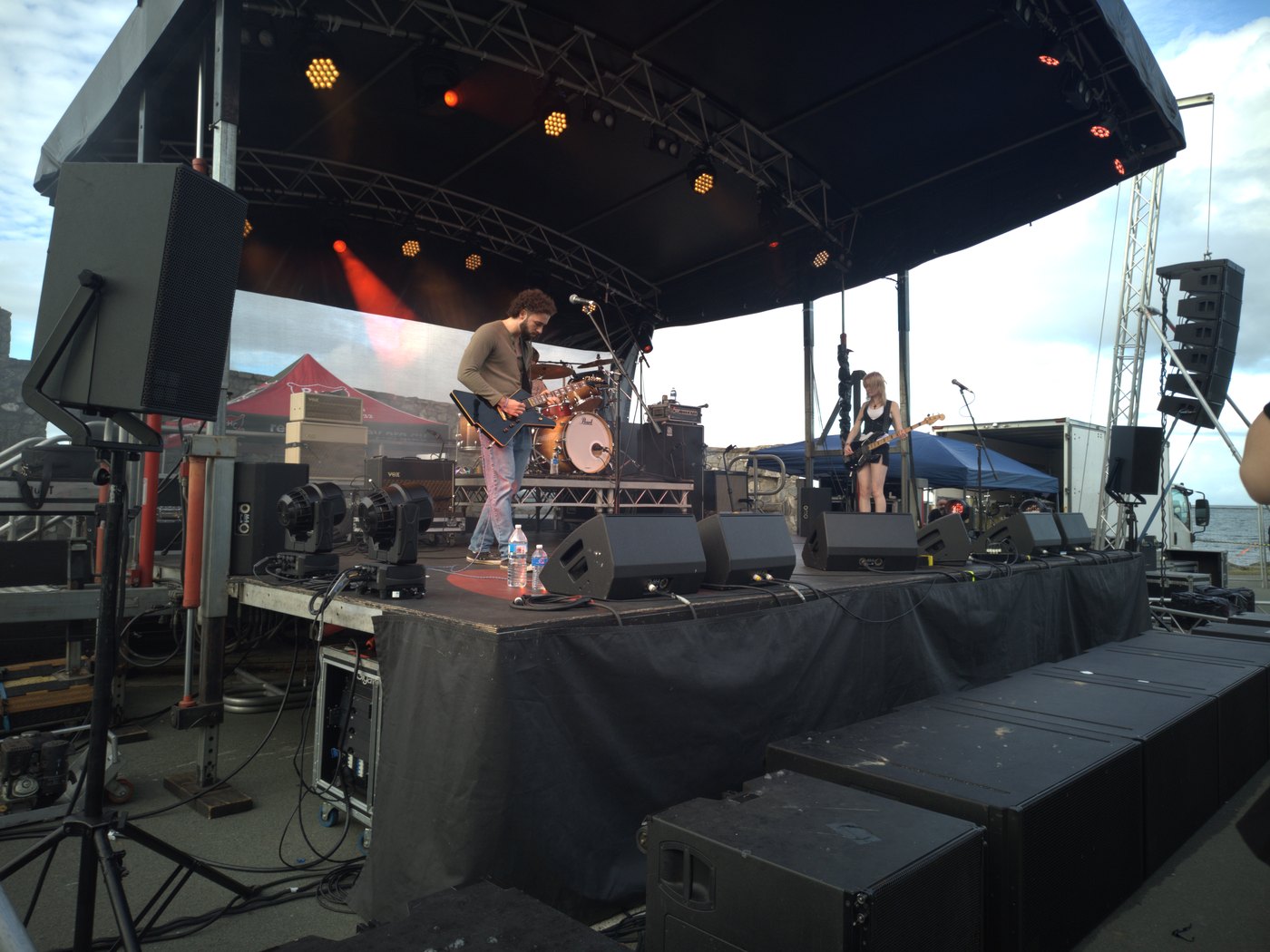
The middle of the afternoon belonged to the other audience. The Phosphenes, who I'd seen at Punk Goes Preschool at the bowls club, played their pub rock to the crowd that music deserves, older than the band and enjoying it in their own seated oldhead way. And Pricey, with The Phosphenes' own Rosie Bowman moonlighting on bass behind him, did his set to a crowd that mostly didn't know they were watching the bloke who co-founded The Chats. The solo songs are reminiscing ballads, personal and slower and plodding where The Chats were sharp and urgent and Australian in a way anyone could grab first listen. When the joke that made your name moves on without you, what's left are songs that work without the thing that made people care, and most people sat down, or didn't place him at all. The Chats numbers, Pub Feed and the rest, were the ones that pulled people up off the grass. There's a whole essay in that ten metres of grass between his old songs and his new ones, and I've written the kind sentence and the honest one and they're the same sentence; he chose the small stages on purpose, he told this magazine so himself last year, and on Saturday the small stage chose him back.
Then the wait. The sun went down over the bay and the wind came up off it, the kind of cold that gets into you when you've been standing on concrete for eight hours on no sleep, and this is where the day thinned out. The band before the Jets played long, and psych rock at dusk to a shivering crowd is a hard sell no matter who you are; Large Mirage are a real band, AC/DC supports on the CV, and in a tent at midnight I'd probably have stayed for all of it, but out there the set stretched and the crowd went looking for warmth. The scene people seemed to evaporate; the Whitt's End boys were spotted sitting far up the back 'taking a break from the music', which, it turned out, they'd earned, because Jarvis had already drummed a full set for Burnout earlier in the day; the crew and the band kids watched from side of stage or vanished altogether, and Brax, who was on the bill but didn't play, spent the day working instead, teching and lugging for the scene bands, Delphic, Heatstroke, the whole shift. That detail stays with me; the youngest label boss this scene has produced came to the festival that outgrew him and worked the stage for everyone else's bands. I stayed in the amphitheatre. I'd waited too long to lose my spot to weather.
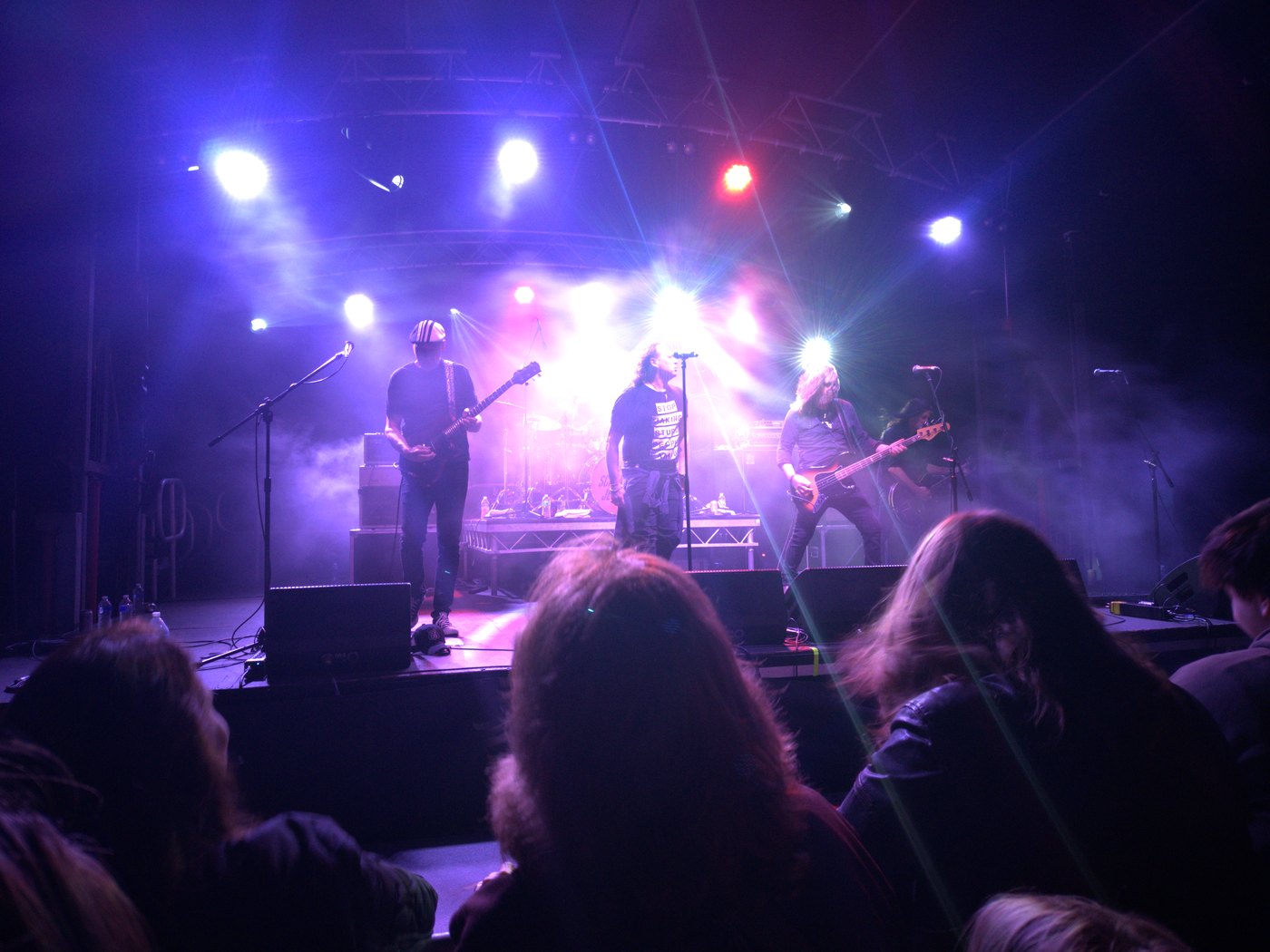
And then the lights went out, The Boys Are Back In Town rolled out of the PA, and every oldhead I thought had gone home materialised at the barrier at once. Dave Gleeson, the last original Jet still standing, walked out and the whole shape of the day changed. I only knew The Screaming Jets from radio rotation, hooks from songs I'd never heard whole, and I'd spent the wait wondering if they were worth the shivering. They were worth double it. The openers were pure rockers, only the oldheads had the verses, and it didn't matter, because the young crowd headbanged harder than the fans; anthems so Australian you knew what they meant before you knew the words. Gleeson worked the stage like the lineage he comes from. I kept thinking of Radio Birdman, the same over-the-top frontman voltage. Between songs he gave a whole speech about how Facebook is a disgrace, to a crowd statistically composed of Facebook users, and told us the Tribe clubhouse mob were doing something real about connection, to a chorus of yee-haws and rodeo clapping. He shouted out the local kids by name. Munkey Town, whom he called Munkey Gems until the crowd corrected him, and Heatstroke, whom he called great, because they are. He introduced one song with 'throughout thirty years on the road The Screaming Jets have always said no to drugs', beat, 'only when nobody's looking'. He deliberated on playing the one with 'cunt' in it and decided against it, citing the apartment towers over the park and the bad example. He dedicated a song to 'all the trillionaires here tonight' in a shirt that said the rich don't deserve the worship, and told the story of the national treasures they'd met on the road, the biggest of them Slim Dusty, before playing the tribute. Then Better, and the whole park sang the line back at him as loud as the PA, and a hardcore rowing pit opened up in front of a thirty-five-year-old pub rock band, which should not work and absolutely did; one of the best live experiences I've had, no qualifiers.
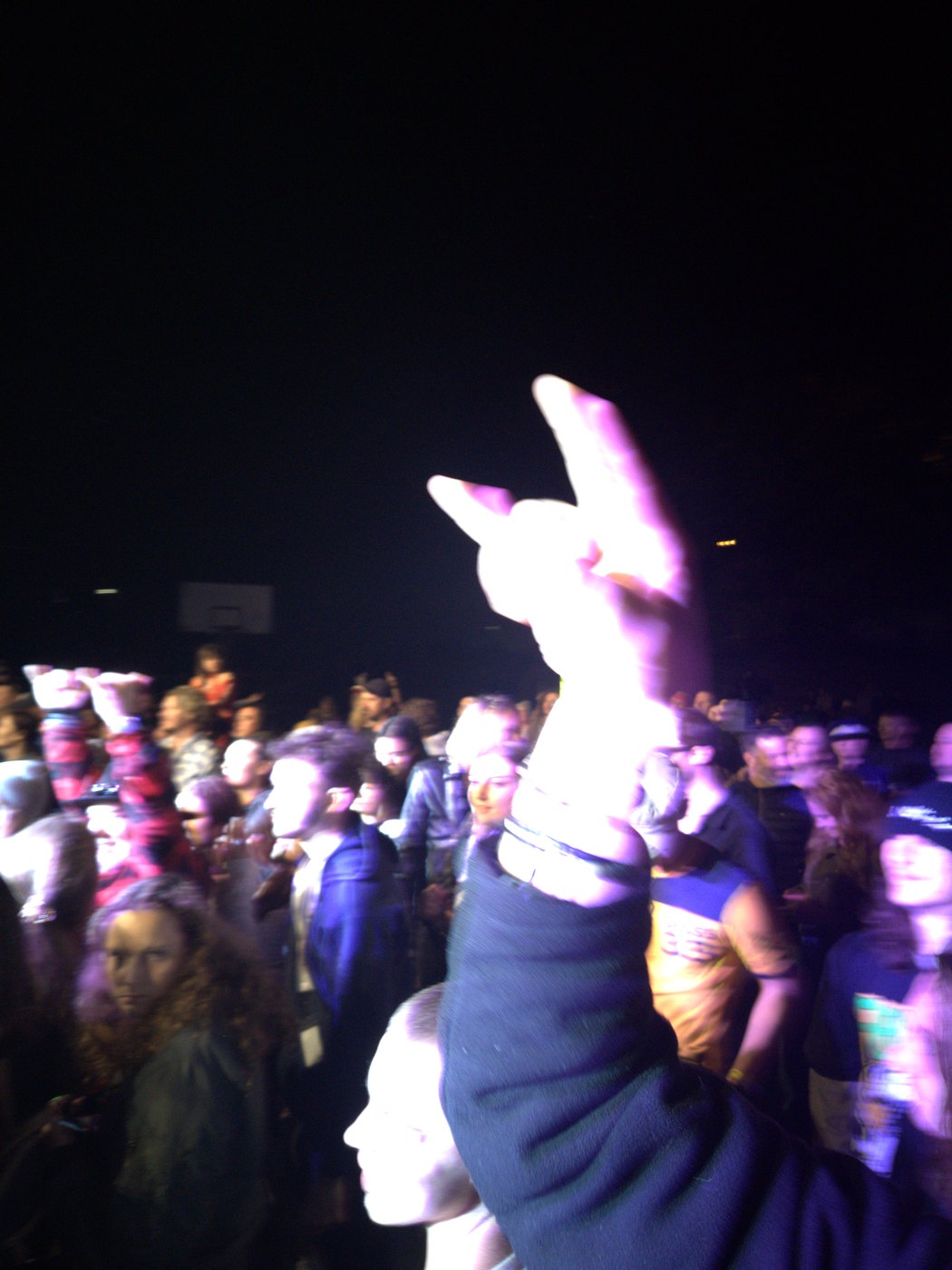
They walked off, and the encore nearly died right there. The oldheads bellowed 'encore' once, raggedly, without conviction, and gave up; a group of five next to us tried to restart it and folded inside thirty seconds. So it came down to me, another young bloke who'd been jumping the entire set, and an oldhead who'd seen the Jets at a venue called Greaser in 1989, before either of us was born. We started ONE MORE at a clap tempo the crowd could actually hold. It spread, row by row, until the whole amphitheatre had it, and it kept going until the band walked back out. Two generations, strangers, restarting an encore together; that's the whole history of this scene in one crowd mechanic, somebody slightly older and somebody slightly younger refusing to let the night end on time. Gleeson came back with an acoustic one, then an anthem, then two bangers deep, and then the surprise; Keep On Rockin' In The Free World, prefaced with his blessing to the young bands on the bill, just keep playing, that's how people find you, and real connection beats the feed every time. It fit the day so exactly it felt planted. Somewhere in this city there's a wall with that line handwritten on it, and I know because I've photographed it. Straight-up rock and roll, everyone belting every word into the cold, and for the length of one Neil Young cover the festival was everything its name promised.
Getting home was its own small story. A bloke I'd met in the pit, one of the jumpers, turned out to have a family exactly as chill as he was, and they folded me into the car without a second thought and dropped me at Redcliffe Station like it was nothing. Two hours back the other way, ears ringing, hands thawing on the train heater, and somewhere on that ride it settled that the whole day had been the life I knew turning up to say hello, and it was good to be back. And that's the review, really. Where We Belong could host the scene; it was never run by it, and a festival can't hand you belonging at the gate, no matter what it's called. Belonging is the thing the scene carries in with it, in the pit, in the encore you have to start yourself, in a stranger's family doing a lap of the peninsula to get a kid to his train. The organisers built a stage by the sea and the Jets set it on fire, and the warmest part of the whole freezing day happened in a Hyundai on the way to the station. We were always going to be the ones bringing the belonging. It's in the name of everything we do; it just doesn't come from the venue.
Reviews from inside the pit, since 2024. More gig reviews ›